
We’re telling our story!
Each month offers activities families can do together in a variety of settings. The activities within the Learning is Everywhere Calendar and, on the website, align with the Pennsylvania Early Learning Standards (ELS).
These guidelines can be used to determine what infants, toddlers, pre-kindergarten, and kindergarten children may know or be able to do within specific age ranges.
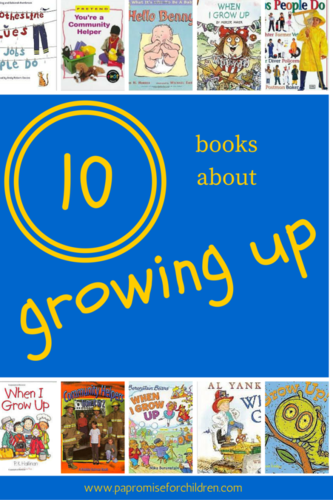
Print the book list! 10 Books about growing up.
- Community Helpers From A to Z by Bobbie Kalman & Niki Walker
- Pretend You’re a Community Helper by Karen Bryant-Mole
- Hello Benny!: What It’s Like to Be a Baby by Robie H. Harris and Michael Emberley
- When I Grow Up by P. K. Hallinan
- Jobs People Do by DK
- The Berenstain Bears: When I Grow Up by Jan and Stan Berenstain
- When I Grow Up by Al Yankovic
- When I Grow Up (Little Critter) by Mercer Mayer
- Grow Up! by Nina Laden
- Clothesline Clues to Jobs People Do by Kathryn Heling, Deborah Hembrook, Andy Robert Davies
Hold your baby and look into the mirror. Point out the different parts of their body (toes, head, fingers, etc.) and then point them out on yourself. Use words to describe the other parts. Tell them what each part does. Give butterfly kisses to their eyes, kisses on their nose, and name each body part. Sing head, shoulders, knees, and toes, and change the words for other parts. Move your hands to the corresponding body part or lightly touch each part with your fingers. (Social and Emotional Development)
Use a book to explore a neighborhood, and then take a walk around it. Help your toddler find objects such as a mailbox, fire hydrant, spring flowers, squirrels, or birds. Talk about what each item does, or what purpose it serves in the community. (Social Studies Thinking)
Ask a relative or family friend to make an audio or video recording of reading their favorite children’s story, or telling a favorite story of when they were a child. Listen to or watch this recording with your toddler and discuss who recorded the story. Follow along in a book that uses pictures, braille, or sign to tell the story. If none are available, create your own computer or paper book together using personal photos, words, and illustrations. (Social and Emotional Development)
Using a paper plate, encourage your preschooler or kindergartner to draw different faces or use face parts cut from magazines, then glue them to the paper plate. Let each paper plate represent a different emotion (happy, sad, angry, etc.). Take turns with your child identifying which face would be used in other situations, such as when they get to eat an ice-cream cone or if the ice-cream cone falls on the ground. (Social and Emotional Development)
Provide your preschooler or kindergartner with a magnifying glass to examine their hair, nails, and skin. What do they see? Have them also examine your hair, nails, and skin. What is the same? What is different? Is each part the same color, texture, or size? What makes each part different? Using the magnification tool on your tablet or computer, demonstrate how the size changes. Create personal dictionaries with pictures and icons as you introduce new descriptive words. Find items in the home for them to feel and explore, extending the sensory experience. (Scientific Thinking)
With your preschooler or kindergartner, create a family tree book. Use photos, stories, recipes, and other materials to represent family members. Share stories about when you were a child, or family stories handed down over time. Talk about aunts, uncles, and cousins, and how the family will continue to grow when they get bigger and have families of their own. If you have family who lives far away, discuss where they live and find their location on a map. Include an individual or family timeline— write down moments to remember. For a child, this may be a more detailed timeline. For a family timeline, it may be more general. (Social & Emotional Development)
Have your preschooler or kindergartner tell you where items of clothing are worn and help them figure out the purpose of each item. Ask why we wear boots while in the snow, for example. Don’t forget items like aprons, belts, and mittens! If your kindergartner is having difficulty with this, playing with paper dolls, Colorforms, or cut-out pictures from magazines provides an opportunity to practice dressing. (Approaches to Learning through Play)